

A balance board is a raised platform designed to move or tilt beneath the user. The way it moves depends on its base or support, so boards can feel quite different even when they share the same broad category name.
Choosing one means matching that movement and the board’s size and surface to your intended use and available space. This guide explains the main design differences and the practical details worth checking before you buy.
Compare Balance Boards
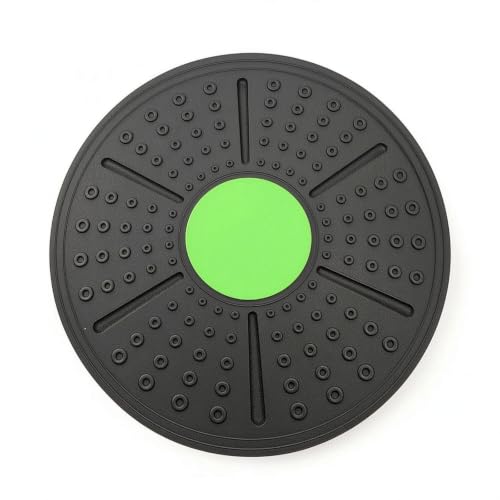


As an Amazon Associate we earn from qualifying purchases.
Which balance board should you choose?
Start by deciding whether you want movement in one direction or in several directions, then compare the board’s support design. Check the platform dimensions, surface and any stated user-weight limit against your needs. A more freely moving design may offer a different challenge, but it can also require more room and confidence than a more restricted movement pattern. Specifications vary by model, so always check the individual product page before buying.
Balance board features compared
| Feature | What It Means | Why It Matters | What To Check |
|---|---|---|---|
| Movement pattern | The directions in which the board can tilt or move. | Different patterns create different balance demands and may suit different preferences. | Look for a clear description of the movement and support design. |
| Base or support | The part beneath the platform that allows movement. | A fixed rocker, rounded base or separate roller can produce a different feel. | Check whether the support is attached or separate, and how the product page describes its movement. |
| Platform size | The usable standing area and overall footprint. | It affects how much room the board takes up and whether its dimensions suit your intended use. | Compare the stated dimensions with your space and preferences. |
| Surface | The material and texture on the standing area. | Surface design affects the feel underfoot and the care the board may need. | Check the product description and any care guidance; do not assume all surfaces are alike. |
| User-weight limit | A maximum user weight, if the maker specifies one. | It is an important suitability check and can vary between designs. | Confirm the stated limit on the individual product page. |
| Storage and floor space | The space needed to use and put away the board. | Some supports or separate parts may need more room than a flat platform alone. | Check overall dimensions and whether any components need separate storage. |
What to consider before buying
Movement and support design
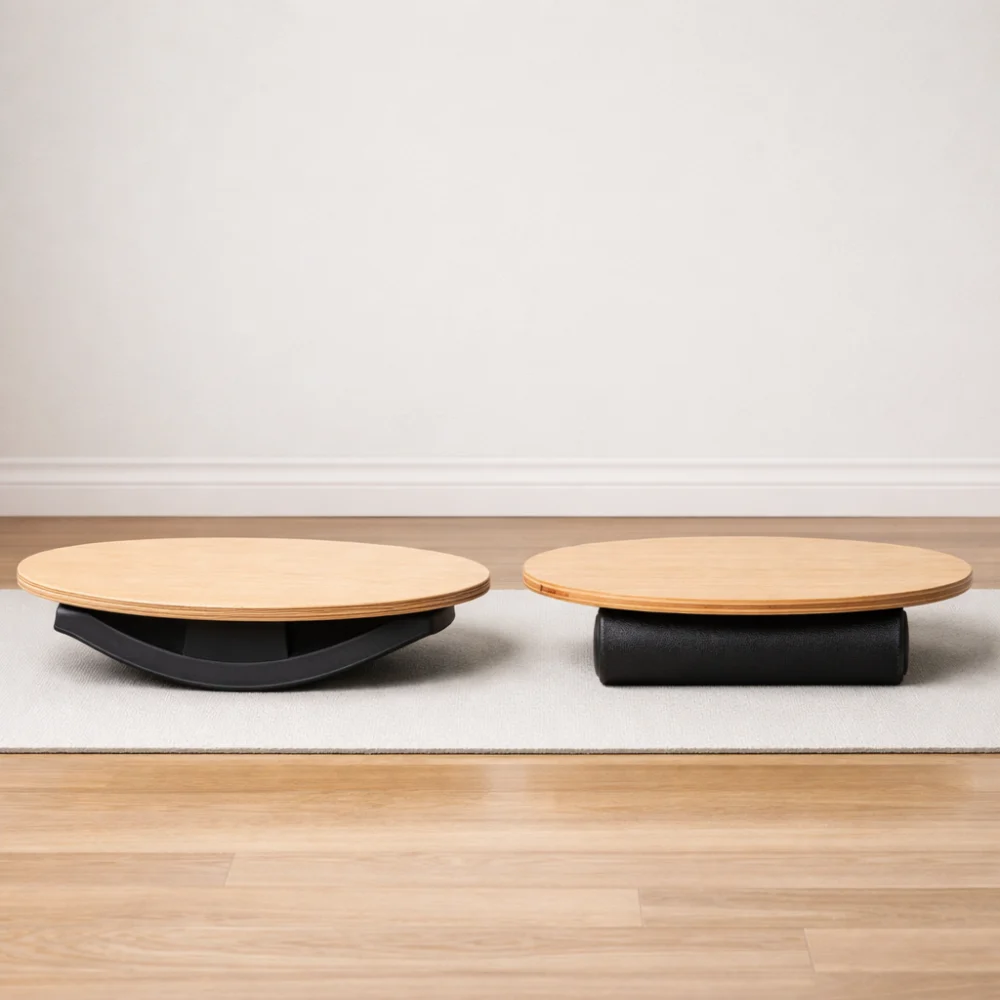
Consider how the board is supported, rather than relying on its name alone. A rocker-style design generally pivots along a more limited line, while a rounded support can allow movement in more than one direction. Designs that use a separate roller also move differently from a fixed base. These are broad design distinctions; check each product’s description to confirm how a particular board is intended to move.
Platform dimensions and usable space
Platform dimensions affect the amount of room available underfoot, while the whole board’s footprint matters for storage and use. Compare the stated measurements with the space you can set aside, allowing for the movement the design permits. A compact board may be easier to store, but do not assume that compact dimensions will suit every user or purpose.
Surface and construction details
Read the product information for the platform’s material, surface texture and care instructions. These details can help you judge the feel and upkeep involved. Avoid treating a textured surface or a particular material as proof of a specific grip level or suitability unless the maker states this clearly.
Weight limit and included parts
Check whether a maximum user weight is stated and make sure it fits your requirements. For designs with a separate roller or other support component, confirm what is included and how the product page describes the parts. Do not infer a limit or included accessory from a product photo alone.
Floor and storage considerations
Think about where you expect to use and store the board. The floor surface and available clearance can affect whether the chosen design is practical in your space. If the product information gives specific surface or storage guidance, use that rather than assuming the same conditions suit every board.
Common balance board types
Names for board designs are not always used consistently, so confirm the movement description on the product page.
- Rocker boards: These typically pivot along a more limited direction. They may suit someone looking for a less freely moving design, but the exact movement depends on the construction.
- Wobble boards: A rounded support commonly allows movement in several directions. This may suit someone seeking a less restricted movement pattern, but it can feel different from a board that pivots along one line.
- Roller boards: These use a deck supported by a separate roller. The separate parts and movement pattern make it especially important to check the product description, dimensions and storage needs.
These labels describe common design approaches, not a guarantee of how a specific model behaves.
Generic comparison illustration of a rocker-style board and a board with a separate roller, shown as simple unbranded product shapes with no text.
Choosing for your needs
- For a more restricted movement pattern: Compare designs described as pivoting along one direction, and confirm the stated movement before choosing.
- For movement in more than one direction: Look at rounded-base or wobble-style designs, while considering whether that movement suits your preference and available space.
- For limited storage space: Compare the complete dimensions and check whether a support or roller is a separate part that needs to be stored.
- For a particular surface or care preference: Compare the stated platform material, texture and cleaning guidance rather than assuming these are standard across the category.
Common buying mistakes
- Choosing by the name alone: Similar labels can describe different constructions. Check the movement and support details on the product page.
- Assuming every board moves the same way: Rocker, rounded-base and roller designs can have different movement patterns. Match the described pattern to your preference.
- Ignoring the overall footprint: The platform alone may not show how much room the full design needs. Compare the board’s dimensions and consider where it will be stored.
- Overlooking a stated weight limit: If one is provided, check it against your requirements rather than guessing from appearance.
- Assuming a surface guarantees grip: Surface descriptions vary, and a texture does not establish a universal grip level. Read the maker’s information and care guidance.
Safety and suitability
Choose a board whose design and stated limits suit your needs, and follow the product maker’s guidance about its intended use and suitable surfaces. Balance boards can move beneath the user, so consider whether you are comfortable with the movement described and whether your space is appropriate. If you have a health condition, are pregnant or take medication, speak to a GP or pharmacist before starting a new exercise routine.
Ownership, care and storage
Care needs depend on the board’s materials and construction. Check the individual product information for cleaning and storage guidance, and allow for any separate parts when considering where it will be kept. Avoid assuming that a particular cleaning product or storage condition is suitable unless the maker says so.
A simple buying process
- Decide what movement pattern you are looking for and where you expect to use the board.
- Narrow the options by support design, such as a rocker, rounded base or separate roller.
- Compare platform dimensions, overall footprint, surface details and any stated user-weight limit.
- Weigh the trade-off between the movement you prefer and the room and storage it requires.
- Read the individual product information for intended use, included parts and care guidance before making a decision.
Balance board buyer checklist
- Does the described movement pattern suit your preference?
- Is the support a fixed base or a separate component?
- Are the platform and overall dimensions suitable for your space?
- Have you checked the stated surface and care details?
- Is any stated user-weight limit suitable for your requirements?
- Have you checked what is included and how the board should be stored?
Frequently asked questions
What is the difference between a rocker board and a wobble board?
A rocker-style board typically pivots along a more limited line, while a rounded-base wobble design commonly allows movement in several directions. Product naming can vary, so check the movement description for the board you are considering.
Is a balance board with a roller different from a board with a fixed base?
Yes. A roller design has a separate moving support beneath the deck, whereas a fixed-base design has its support attached. Check the product information for how the parts work together and what is included.
How much space do I need for a balance board?
It depends on the board’s dimensions and how its support allows it to move. Check the complete product measurements and consider both the use area and storage space.
Do all balance boards have a user-weight limit?
Specifications can differ, and a limit may not be stated in the same way for every design. Check the individual product page and do not infer a limit from the board’s appearance.
How should I clean and store a balance board?
Follow the care and storage information provided for the particular board, since materials and construction vary. If it has separate components, include those in your storage plans.
Can a balance board be used on any floor?
Do not assume every board is suited to every floor surface. Check the product maker’s guidance and consider whether the intended space is appropriate for the board’s movement.
More Balance Boards
See all 64 Balance Boards →


As an Amazon Associate we earn from qualifying purchases.