

A yoga block is a supportive prop used to bring the floor closer or provide a surface for the hands, feet or seated position. The right choice depends on how you intend to use it, how firm a surface you prefer and whether you need one block or more.
Material, dimensions and shape can affect weight, grip, firmness and ease of storage. Compare those details with the product information rather than assuming all blocks feel or work alike.
Which yoga block should you choose?
Start with the positions or types of support you have in mind, then consider block height, firmness and how stable it feels on the surfaces you use. Foam, cork and wood blocks can differ in weight and feel, but the exact experience depends on the individual product. Check dimensions and whether the listing is for one block or a set. The main trade-off is often between a lighter block that is easier to carry and a firmer or heavier-feeling option, so prioritise what matters for your use.
Yoga block features compared
| Feature | What it means | Why it matters | What to check |
|---|---|---|---|
| Material | The substance the block is made from, such as foam, cork or wood. | It can affect weight, firmness, surface feel and care needs. | Read the material description and consider whether you prefer a lighter or firmer-feeling block. |
| Dimensions | The length, width and height of the block. | These influence how much support it offers and how it fits your hands or storage space. | Compare the listed measurements with your intended use and available storage. |
| Shape and edges | The block’s overall form and the profile of its edges. | Shape can affect how it sits on the floor and how it feels to hold. | Check product images and descriptions for the shape and edge finish. |
| Firmness and stability | How the block feels under pressure and whether it sits steadily on a suitable surface. | A feel that suits one use may not be your preference for another. | Look for product information about firmness, surface texture and intended use. |
| Quantity | Whether the listing includes one block or multiple blocks. | Some positions or preferences may call for a pair, while one may be enough for other uses. | Confirm the number of blocks included in the individual listing. |
What to consider before buying
Material and feel
Foam blocks are commonly chosen when low weight and easy carrying matter. Cork and wood blocks are often firmer and heavier-feeling alternatives. These are general tendencies, not guarantees: construction and finish vary, so check the specific description and images. A heavier block may be less convenient to take to a class, while a lighter one may feel different under pressure.
Size and usable height
Dimensions affect both the height available when a block is positioned on different faces and the space it takes up in a bag or at home. Consider which orientations you expect to use and whether the listed measurements suit your hands and intended support. Specifications vary by model, so always check the individual product page before buying.
Shape, surface and stability
Blocks may have different edge profiles or surface finishes. These can influence how comfortable a block feels to grip and how confidently it rests on the floor. Look for clear product information and consider the surfaces where you plan to use it; do not assume that a particular shape or finish guarantees grip or stability in every setting.
One block or a pair
Think about whether you want one prop or matching support on both sides. A pair can offer more options for some positions, but it also takes up more space and may add weight to carry. Check the stated quantity rather than relying on a product photograph.
Types and material choices
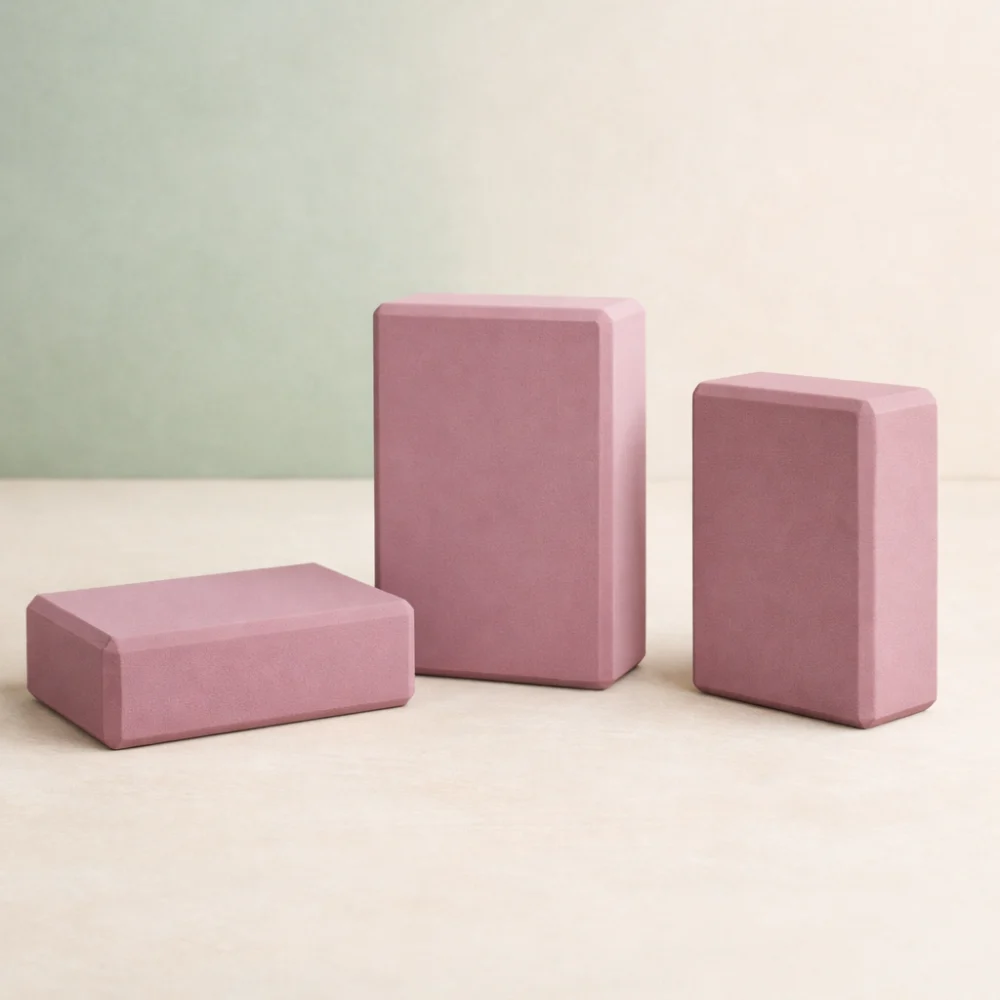
Foam, cork and wood are the main material choices buyers may encounter. Foam is generally a lighter option to carry; cork and wood tend to offer a firmer, heavier feel. Blocks also differ in dimensions, edge shape and finish. There is no single best material for everyone, so compare the details and consider portability, feel and storage together.
Choosing for your needs
- For carrying to classes: Give weight and size extra attention, and check whether the block will fit your bag.
- For a firmer feel: Compare the product’s material and firmness information; do not rely on material name alone to predict the exact feel.
- For use at home: Consider the dimensions, storage space and whether one block or a pair better suits the support you want.
- For a first block: A versatile shape and clear dimensions can make it easier to understand what you are choosing. Check the intended uses stated by the maker and avoid assuming one block suits every position.
Common buying mistakes
- Choosing by material alone: Products made from the same broad material can still differ. Compare dimensions, finish and product-specific firmness details too.
- Overlooking measurements: A block that looks compact in a photograph may not match your preferred height or storage space. Check the listed dimensions.
- Assuming a set includes two: Images can show more than one block for illustration. Verify the quantity in the listing.
- Expecting every block to feel the same: Shape, construction and finish affect the experience. Treat broad material descriptions as a starting point, not a guarantee.
Safety and suitability
Choose a block intended for yoga use and check the product information for its stated materials, dimensions and care guidance. Before relying on it for support, consider whether its shape and feel suit your intended use and the surface beneath it. If a block feels unsuitable or unstable for what you have in mind, choose another option rather than assuming all designs behave alike.
Care, storage and ownership
Care requirements depend on the material and finish, so follow the maker’s cleaning guidance. Store the block somewhere dry and out of the way where it is less likely to be damaged or become a trip hazard. If you plan to carry it regularly, include its weight and dimensions in your storage decision.
A practical buying process
- Decide what kind of support you want the block to provide.
- Choose whether portability or a firmer, heavier feel matters more to you.
- Compare dimensions, shape and surface details against your intended use.
- Decide whether one block or a pair makes sense for your needs.
- Confirm the material, quantity, care information and measurements on the individual product page.
Yoga block buyer checklist
- Does the block’s stated use match what you want it for?
- Have you checked its material, dimensions and shape?
- Does its described feel suit your preference?
- Will its size and weight work for carrying or storage?
- Have you confirmed how many blocks are included?
- Have you read the product’s care guidance?
Yoga block FAQs
Are foam, cork and wood blocks interchangeable?
They can serve a similar broad purpose, but they may differ in weight, firmness and surface feel. Compare the individual product details and choose according to your preferences and intended use.
Should I buy one yoga block or two?
That depends on how you expect to use the blocks and whether you want support on both sides. If you are unsure, consider your planned uses and check the quantity stated in each listing before deciding.
How do I choose the right block size?
Start with the support and height you want, then compare the listed dimensions and consider how the block may sit on its different faces. Product images can help you understand its shape, but measurements are the more useful comparison.
Is a heavier yoga block better?
Not necessarily. A heavier block may appeal if you prefer a firmer, more substantial feel, while a lighter one may be easier to carry. Neither characteristic alone makes a block the right choice for every buyer.
How should I care for a yoga block?
Follow the maker’s guidance for the specific material and finish. Care recommendations can differ, so avoid assuming that the same cleaning approach suits every block.