

Camping cookware covers pots, pans and related cooking vessels intended for use away from a home kitchen. The right choice depends less on having the largest set and more on what you expect to cook, how many people you usually prepare food for and how you carry your kit.
Before comparing products, consider your cooking setup and the space available in your bag or vehicle. Check each item’s stated materials, contents and intended heat-source compatibility rather than assuming that cookware will suit every setup.
Compare Camping Cookware


As an Amazon Associate we earn from qualifying purchases.
What camping cookware should you choose?
Start with the meals you want to make and choose only the types of vessels needed for them. A compact set may be convenient to pack together, while separate pieces can give you more control over the shape and size of each item. Compare packed size and weight with cooking capacity, and check compatibility with your intended heat source on the individual product page.
Compare the main buying factors
| Feature | What it means | Why it matters | What to check |
|---|---|---|---|
| Cookware type | Pots, pans and other cooking vessels serve different purposes. | The shape and number of pieces affect which meals are practical to prepare. | Whether the contents suit the food you plan to cook. |
| Material | Cookware may be made from different metals or have a coated cooking surface. | Materials can differ in weight, care needs and cooking characteristics. | The stated material, any coating and the manufacturer’s care guidance. |
| Set or individual pieces | A set groups several items; separate pieces let you choose them individually. | A set can be convenient to pack together, but may include pieces you do not need. | Exactly what is included and whether the pieces fit together for storage. |
| Handles and lids | Design details vary between items and sets. | They affect handling, packing and how you use each vessel. | What is included, how handles are described and any stated use restrictions. |
| Packed size and weight | The space and carrying load the cookware takes up. | Important when fitting kit into a pack, storage box or vehicle. | Listed dimensions and weight, if provided, and whether they refer to individual items or a packed set. |
| Heat-source compatibility | Not every item is necessarily intended for every cooking setup. | A mismatch can make a piece unsuitable for your planned use. | The manufacturer’s stated compatibility for your intended heat source. |
Choosing cookware that suits your trip
Decide what you need to cook
Think about whether you mainly need a vessel for heating or boiling, or whether your meals call for a pan as well. Buying around a few likely meals can help avoid carrying pieces that will rarely be used. Do not assume that a set includes a particular pot, pan, lid or accessory; check its contents.
Balance material and care
Different materials and surface finishes involve different trade-offs in weight, handling and care. For example, a coated surface may call for different cleaning and utensil guidance from an uncoated metal surface. Read the product information for the stated construction and follow its care instructions rather than treating all cookware alike.
Check how it packs
Cookware that nests or packs together can make a set easier to carry, but the packed dimensions matter as much as the number of pieces. If you travel on foot, compare the listed weight and packed size with the rest of your kit. For vehicle-based trips, consider where the cookware will be stored and whether its shape fits your available space.
Specifications vary by model, so always check the individual product page before buying.
Types and variations
- Cooking pots: A practical choice when your planned meals call for a deeper vessel. Check the stated capacity and whether a lid is included.
- Camping pans: Useful when the meals you intend to make need a shallower cooking surface. Consider the stated dimensions and how the handle affects packing.
- Cookware sets: Can group several pieces for a coordinated packing option. Check every included item and the full packed size so you are not carrying unnecessary pieces.
- Individual pieces: Let you select particular shapes or sizes for your needs. They may take more thought to pack together than a set designed to nest.
Match cookware to how you camp
- For backpacking: Give close attention to weight, packed dimensions and whether pieces fit together. A larger set may offer flexibility but take up more room and add carrying weight.
- For car camping: Storage space may be less restrictive, so compare the vessel types and contents that suit your meals rather than choosing by compactness alone.
- For a simple cooking setup: A small selection of relevant pieces may be easier to manage than a broad set. Check that the pieces cover the cooking tasks you have in mind.
- For replacing or adding to existing kit: Compare dimensions, materials and compatibility with the items you already use. Confirm fit or compatibility from the product information instead of assuming it.
Common buying mistakes
- Choosing by piece count alone: More pieces do not necessarily mean a better fit. Check what each item is for and whether you will use it.
- Overlooking packed dimensions: A set’s contents may fit together, but the packed size can still be unsuitable for your bag or storage space. Check stated measurements where available.
- Assuming universal heat-source compatibility: Do not infer suitability from a cookware item’s appearance. Look for the manufacturer’s stated guidance for your cooking setup.
- Ignoring care instructions: Materials and coatings can have different care requirements. Check these before buying, particularly if easy cleaning is important to you.
- Assuming accessories are included: Product images or descriptions may show a collection of items. Read the contents list to confirm what comes with the cookware.
Safety and suitability
Choose cookware only for the uses and heat sources stated by its manufacturer. Check product guidance for handling, surface care and any stated restrictions, and consider whether the item’s size and design are suitable for the people who will use it. Do not assume that a particular material or coating is appropriate for your setup without checking its product information.
Cleaning, care and storage
Care requirements depend on the material and any surface finish, so use the product’s own cleaning instructions. Before packing cookware away, make sure its care guidance allows it to be stored in the condition you intend, and consider how pieces will be kept together without damaging their surfaces. If nesting items, check whether the manufacturer gives specific storage advice.
A practical way to choose
- Write down the meals and cooking tasks you want the cookware to cover.
- Decide whether a set or a few separate pieces better suit those tasks.
- Compare materials, included items, packed dimensions and weight where stated.
- Check the manufacturer’s compatibility guidance for your intended heat source.
- Read the individual product information for care instructions, restrictions and exactly what is included.
Buyer checklist
- Does the cookware include the vessel types you need?
- Have you checked the listed materials and any coating?
- Are the packed dimensions and weight suitable for how you travel?
- Does the manufacturer state compatibility with your intended heat source?
- Have you confirmed what is included, including lids or other pieces?
- Are the care and storage requirements practical for your trips?
Camping cookware FAQs
Is a cookware set better than buying individual pieces?
A set can make it easier to get several matching pieces together, while buying individually gives you more control over exactly what you carry. Compare the set contents and packed size with the cooking tasks you have in mind.
What should I look for in lightweight camping cookware?
Check the listed weight and packed dimensions, and consider whether the pieces fit together for carrying. Balance a lower carrying load against the vessel types and capacity you need for your planned meals.
Can camping cookware be used with any heat source?
Do not assume so. Compatibility depends on the particular cookware and the manufacturer’s guidance, so check the product information for your intended setup.
Should I choose coated or uncoated cookware?
Consider the cooking tasks and care requirements that matter to you. Check the stated surface finish and cleaning guidance, since requirements can differ between products.
How can I tell whether a set will fit in my pack?
Look for the packed dimensions and weight, and check whether listed measurements refer to the full set or individual pieces. If the pieces are designed to nest, confirm the dimensions of the packed arrangement where these are provided.
What should I check before buying replacement cookware?
Compare the replacement’s dimensions, material and stated heat-source compatibility with your existing setup. Confirm that it will suit the space you have and the way you plan to use it rather than relying on appearance alone.
More Camping Cookware
See all 81 Camping Cookware →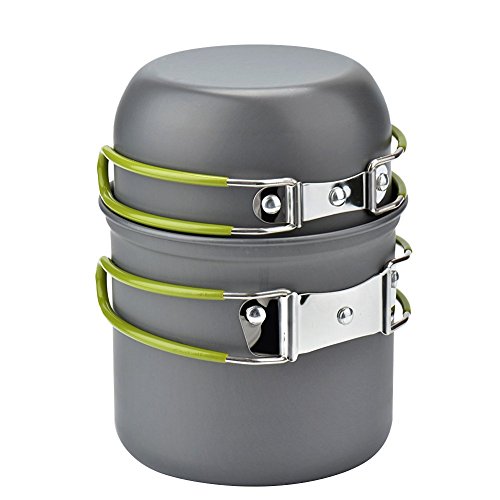


As an Amazon Associate we earn from qualifying purchases.