

A multi cooker combines more than one cooking function in a countertop appliance, but the functions included can differ considerably. Some models centre on a particular task, while others offer a broader choice of modes.
The right choice depends on what you want to cook regularly, how many portions you usually prepare and whether you have room to store the appliance. Compare the functions and practical details rather than relying on the category name alone.
Compare Multi Cookers

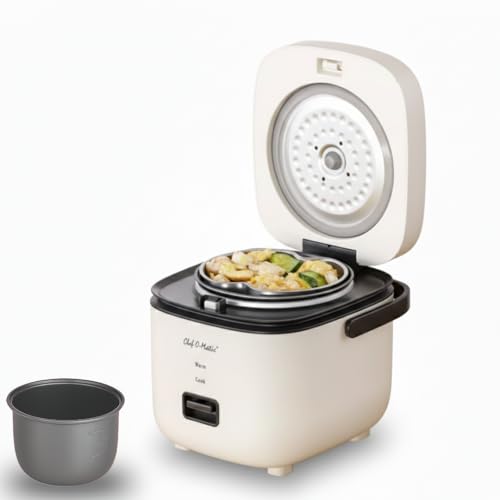


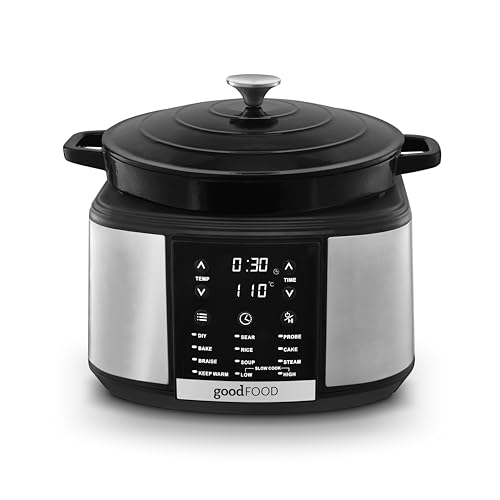

As an Amazon Associate we earn from qualifying purchases.
Which multi cooker is right for your kitchen?
Start with the meals you expect the appliance to prepare and check that those functions are explicitly listed for the model. Then compare usable capacity, counter or storage space, controls and how the cooking pot and accessories are cleaned. More functions can offer flexibility, but they may add controls or parts you do not need. Specifications vary by model, so always check the individual product page before buying.
Multi cooker features compared
| Feature | What it means | Why it matters | What to check |
|---|---|---|---|
| Cooking functions | The tasks or cooking modes the appliance is designed to perform. | Determines whether it suits the meals you plan to make and could replace another appliance. | Look for the specific functions you will use; do not assume they are included because it is called a multi cooker. |
| Capacity | The amount the cooking pot is designed to hold. | Affects the portions you can prepare and the space the appliance takes up. | Check the stated capacity and how the manufacturer describes it; consider your usual portions and available storage. |
| Controls and programmes | How settings are selected, including any preset programmes. | Clear controls can make it easier to choose the intended function, while many options may be unnecessary for some buyers. | Review the control layout and programme descriptions in the product information. |
| Pot and accessories | The cooking vessel and any supplied components. | These affect how you use, clean and store the appliance. | Check what is included, whether parts are removable and the care instructions for each part. |
| Dimensions and storage | The space needed for the appliance and its parts. | A larger or multi-part appliance may be awkward to keep on a small worktop or store between uses. | Compare the listed dimensions with your counter, cupboard and storage plans. |
What to consider before choosing
Functions you will actually use
Make a short list of the cooking tasks you want one appliance to handle. A model with a focused set of functions may be simpler to compare if you have a clear use in mind; a wider selection of modes may suit you if you want more flexibility. Read each function’s description rather than treating a long programme list as proof that it will suit every recipe.
Capacity and kitchen space
Choose capacity around your usual cooking needs, not an occasional maximum. A larger pot can take up more room, while a smaller one may not suit the portions you regularly prepare. Check the stated capacity, the appliance’s external dimensions and whether you have somewhere convenient to store the pot and any accessories.
Controls and everyday use
Consider whether you prefer straightforward controls or are comfortable selecting from several programmes. Product information and any supplied instructions can clarify how settings are selected and what each mode is intended for. If more than one person will use the appliance, a control layout that everyone can understand may matter more than an extensive list of options.
Cleaning and included parts
Cleaning needs depend on the pot, lid and accessories supplied. Check which parts are removable and follow the stated care instructions; do not assume a component is suitable for a particular cleaning method unless the product information says so. Also consider where detachable parts can dry and be stored.
Types and variations
Some multi cookers offer several distinct cooking modes, while others are centred on a particular function, such as rice cooking, with another function also listed. Neither format is automatically better: the useful choice is the one whose stated functions match your regular meals. Compare the specific modes and included components rather than assuming all appliances in this category work alike.
Choosing for your needs
- For a specific regular task: Prioritise the relevant function and check how the manufacturer describes its use. Extra modes may not be worth a larger or more complex appliance if you will rarely use them.
- For varied meal preparation: Compare the full list of functions and controls. Check that the modes cover the tasks you have in mind rather than assuming one appliance can replace all your current cooking equipment.
- For a compact kitchen: Give dimensions and storage priority alongside capacity. Check the space needed for removable parts as well as the appliance itself.
- For shared household use: Look for clear programme descriptions and consider whether the pot and accessories are manageable for the people who will use and clean them.
Common buying mistakes
- Assuming every model has the same functions: Check the individual function list; the category name alone does not confirm a particular cooking mode.
- Choosing capacity without considering storage: Compare both the pot capacity and the appliance’s external dimensions with your kitchen space.
- Focusing on the number of programmes: A longer list is not necessarily more useful. Check what the modes are for and whether they fit your usual cooking.
- Overlooking cleaning details: Confirm which parts come off and what care is specified before deciding whether the appliance suits your routine.
Safety and suitability
Choose an appliance intended for the cooking tasks you plan to use and read the supplied instructions before use. If a model includes a specialised function, check the manufacturer’s guidance and suitability information for that model rather than assuming it applies across the category.
Ownership, cleaning and storage
Before buying, consider where the appliance will sit during use and where it will be kept afterwards. Check the care instructions for the pot, lid and accessories, along with which parts are removable. Keeping the appliance and its components together may also make storage and everyday use more convenient.
A practical buying process
- Write down the cooking tasks you want the appliance to perform.
- Decide what capacity and storage space make sense for your kitchen.
- Compare models by their stated functions, controls and included parts.
- Weigh the benefit of extra modes against added complexity or space needs.
- Check dimensions, capacity and care information on the individual product page.
Buyer checklist
- Are the cooking functions you need explicitly listed?
- Does the stated capacity suit your usual portions?
- Will the appliance and its parts fit your counter and storage space?
- Are the controls and programme descriptions clear to you?
- Have you checked which parts are included, removable and how they should be cared for?
- Have you reviewed the model-specific instructions and product information?
Frequently asked questions
What does a multi cooker do?
It is a countertop cooking appliance with more than one stated cooking function. The particular tasks and modes depend on the model, so check the product information for the functions included.
Are all multi cookers pressure cookers?
No. The category name does not confirm that a model has a pressure-cooking function. Check the stated functions and instructions for the specific appliance.
Can a multi cooker replace other kitchen appliances?
That depends on the functions included and the way you cook. Compare its listed modes with the tasks you currently use other appliances for, and avoid assuming it can perform a function that is not specified.
How do I choose the right capacity?
Consider the portions you usually prepare and compare them with the capacity stated for the model. Also check the appliance’s external dimensions, since a pot that suits your cooking may still require more counter or cupboard space.
What should I check about cleaning?
Look at the care instructions for the cooking pot, lid and any accessories, and confirm which parts are removable. Cleaning requirements can vary between models and components.
Is a model with more programmes always better?
Not necessarily. More modes can be useful if they match different tasks you regularly want to do, but a focused set of functions may be easier to compare when your needs are specific.
More Multi Cookers
See all 36 Multi Cookers →


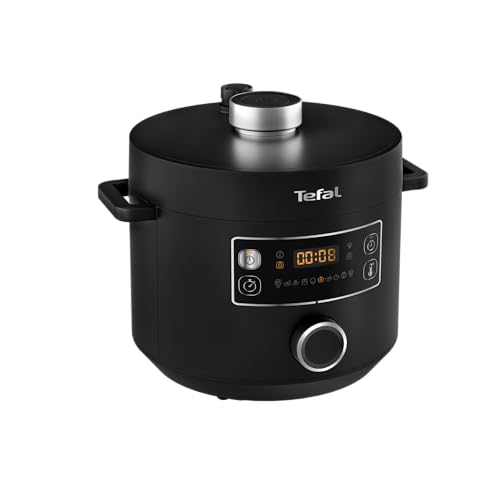


As an Amazon Associate we earn from qualifying purchases.