

Choosing a treadmill is about matching its intended use to the space, pace and features you need. A model for walking may have different priorities from one intended for regular running, and a compact or folding design may involve a different balance of footprint and storage convenience.
Consider who will use it, where it will sit and how it will be stored before comparing displays or extra features. The guide below explains the main trade-offs and what to verify before buying.
Compare Treadmills


As an Amazon Associate we earn from qualifying purchases.
What should you look for in a treadmill?
Start with your intended use, then check that the running or walking area and available speed range suit it. Measure the space where the treadmill will be used and stored, allowing for the product’s full dimensions and any clearance specified by its manufacturer. Compare frame style, incline options and controls only after those basics fit. The best balance depends on your space and preferences, not on having the most features.
Treadmill features compared
| Feature | What it means | Why it matters | What to check |
|---|---|---|---|
| Intended use and speed range | The paces and kinds of use the treadmill is designed to accommodate. | A walking-focused choice may have different priorities from a treadmill used for running. | Compare the stated speed range with the pace you expect to use, and check any guidance on intended use. |
| Running surface | The usable belt area for walking or running. | Available space can affect how comfortable the treadmill feels for your stride and intended activity. | Check the belt’s usable length and width, and consider who will use it. |
| Incline | Whether the treadmill offers an incline and how it is adjusted. | It can add another way to vary a session, but the available adjustment differs by model. | Check whether incline is included, how it is controlled and what range is stated. |
| Frame and folding design | Whether the treadmill is fixed or has a folding deck or frame. | A folding design may help with storage, while still needing room when set up and folded. | Compare the full dimensions in both positions and the stated folded-storage requirements. |
| User weight limit | The maximum user weight stated for that model. | It helps you assess whether the treadmill is suitable for its intended users. | Check the individual product information and choose a model whose stated limit accommodates its users. |
| Controls and display | The information shown and the controls provided. | A clear, straightforward layout may make it easier to use the settings you want. | Check which information is displayed and whether any connectivity or device compatibility is explicitly stated. |
| Power and placement | Any power requirements and placement guidance for the particular model. | These can affect where the treadmill can be set up. | Read the manufacturer’s stated power and positioning requirements before deciding on a location. |
Choosing the right treadmill for your space and use
Match the treadmill to your intended pace
Think about whether the treadmill will mainly be used for walking, jogging or running. Check the stated speed range rather than relying on a product name or general description. If more than one person will use it, compare the range and controls with each person’s intended use.
Check the running surface
The belt’s usable length and width are more informative than the treadmill’s overall footprint when considering room to move. Consider the stride of the intended users and compare the stated belt dimensions on each product page. A larger running surface may take up more room, so balance comfort with the space available.
Plan for the full footprint
Measure the intended location before comparing compact designs. Check the treadmill’s dimensions when in use, and, if it folds, its dimensions when stored. Also allow for any operating or clearance space specified by the manufacturer. A folding deck does not by itself confirm that the whole unit will be easy to move or store.
For a practical space check, compare the treadmill’s stated dimensions with the usable floor area in your intended location, including any manufacturer-specified clearance.

Consider incline and controls
Some models offer incline adjustment, while the available options and method of control vary. Decide whether you are likely to use this feature and check the product information for the adjustment provided. Displays and extra controls can also differ; focus on information you will find useful rather than treating a longer feature list as automatically better.
Compare weight limits and construction information
Check the stated maximum user weight for the specific treadmill, particularly if it will have more than one user. Also review any stated guidance about intended use and the product’s overall dimensions. Specifications vary by model, so always check the individual product page before buying.
Treadmill types and variations
- Motorised treadmills: These use a powered belt, with speed controlled through the treadmill. Compare the stated speed range, power requirements and controls. They need a suitable location and access to power as specified by the manufacturer.
- Manual treadmills: These do not use a powered belt in the same way as motorised models. Their design and how the belt moves can vary, so check the product description carefully to understand what is controlled by the user and what features are included.
- Folding treadmills: These have a frame or deck designed to fold for storage. They may suit a room where the treadmill cannot stay set up, but check both sets of dimensions and the manufacturer’s storage guidance.
- Fixed-frame treadmills: These do not fold in the same way as a folding model. They may suit a space where the treadmill can remain assembled, but their full footprint needs to fit the chosen location.
These descriptions can overlap: for example, a treadmill may be motorised and folding. Compare the actual product details rather than assuming one design determines its other features.
Which treadmill may suit your needs?
- For walking: Prioritise a speed range that includes your intended walking pace, a suitable running surface and straightforward controls.
- For running: Pay particular attention to the usable belt dimensions, stated speed range and user weight limit. Check these against the needs of each intended user.
- For a shared household: Compare the range of speeds, running surface, controls and weight limit against all intended users rather than choosing around just one person.
- For a room with limited storage: Compare folding options and the folded dimensions, but also confirm the space required while the treadmill is in use.
- For a dedicated exercise space: A fixed design may be worth comparing if the treadmill can remain set up. Check its overall footprint and any placement guidance.
Common treadmill buying mistakes
- Choosing by folded size alone: A compact stored footprint does not tell you whether the treadmill fits when open. Compare both sets of dimensions before deciding.
- Assuming every treadmill suits running: Intended use and speed range differ. Check the specific product information against the activity you have in mind.
- Overlooking belt dimensions: The overall frame size does not show how much usable surface there is. Look for the stated belt length and width.
- Focusing on extras before essentials: Displays or connectivity may not compensate for a poor fit with your space or intended use. Set priorities for footprint, surface and speed range first.
- Assuming folding means easy to move: A folding mechanism describes storage design, not necessarily the effort or ease of moving the unit. Check the product details and storage guidance.
Safety and suitability
Choose a treadmill according to the manufacturer’s stated intended use, user weight limit and placement guidance. Consider whether the space and controls are suitable for everyone who may use it, and follow the product’s instructions. If you have a health condition, are pregnant or take medication and are considering new exercise, speak to a GP or pharmacist first.
Ownership, care and storage
Before buying, consider where the treadmill will stay and whether its power and placement requirements can be met there. For a folding model, check that you have suitable storage space and that the manufacturer’s guidance fits your circumstances. Care requirements vary, so review the product instructions for any cleaning or maintenance expected; do not assume that all belts or frames need the same care.
How to choose a treadmill
- Decide whether the treadmill is mainly for walking, jogging or running, and identify who will use it.
- Measure the intended location and compare the treadmill’s in-use dimensions, plus folded dimensions if relevant.
- Shortlist options with a suitable running surface, speed range and stated user weight limit.
- Compare incline, controls and other features you would genuinely use, considering their trade-offs.
- Read the individual product information for placement, power, storage and care requirements before making a decision.
Treadmill buyer checklist
- Does the stated intended use match walking, jogging or running?
- Are the speed range and usable belt dimensions suitable for the intended users?
- Is the stated maximum user weight appropriate?
- Will the treadmill fit in the space when set up, with any required clearance?
- If it folds, will it fit the available storage space?
- Do the incline, controls and display offer the features you need?
- Can you meet the stated power, placement and care requirements?
Frequently asked questions
How much space do I need for a treadmill?
It depends on the model, so compare its dimensions when set up with the usable space you have. Check the manufacturer’s placement and clearance guidance as well. For folding designs, compare the folded dimensions separately.
Is a folding treadmill a better choice for a small room?
It may help when the treadmill needs to be stored between uses, but folding alone does not determine how compact or easy to store it is. Compare the open and folded dimensions and check the storage guidance for the individual model.
Can I use any treadmill for running?
Do not assume so. Check the stated intended use, speed range, belt dimensions and user weight limit against the needs of the person who will use it.
What is the difference between a motorised and manual treadmill?
A motorised treadmill uses a powered belt, while a manual model does not use a powered belt in the same way. Designs and controls vary, so read the product details to understand how a particular treadmill works and what features it includes.
Does a treadmill need an incline feature?
Not necessarily; it depends on your preferences and intended use. If incline matters to you, check whether the model includes it, how it is adjusted and what options the product information specifies.
What should I check if more than one person will use the treadmill?
Compare the stated speed range, belt dimensions, controls and maximum user weight with the needs of all intended users. Confirm that the treadmill’s intended use and placement requirements suit the household.
More Treadmills
See all 49 Treadmills →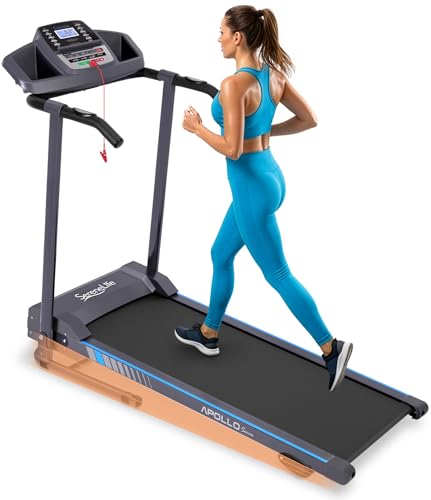


As an Amazon Associate we earn from qualifying purchases.