

Trekking poles are walking aids used by some hikers for an additional point of contact on the trail. Choosing a pair means balancing fit and handling with how you plan to carry and use them.
Consider the walks you take, the terrain you encounter and whether you want poles that adjust for different users or conditions. The individual product details matter: designs and adjustment systems vary, so a feature that suits one walker may not suit another.
Compare Trekking Poles


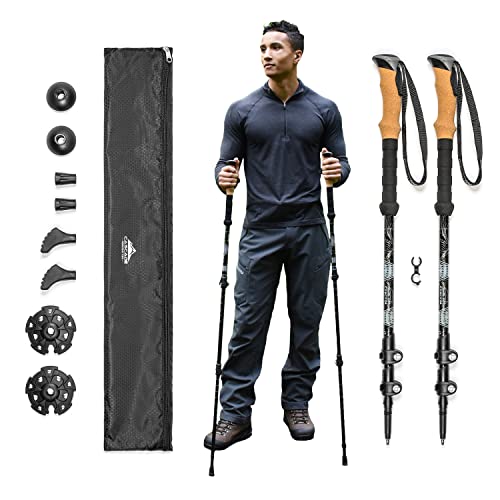

As an Amazon Associate we earn from qualifying purchases.
What should you look for in trekking poles?
Start with a pair you can set to a suitable length for your intended use, then consider how the adjustment system works and whether its weight and packed size suit your walks. Check the grip, strap and pole tips for comfort and compatibility with the surfaces you expect to encounter. The main trade-off is often between adjustability, compact storage and simplicity.
Compare the key buying factors
| Feature | What it means | Why it matters | What to check |
|---|---|---|---|
| Adjustment system | How the pole length is set or secured. | It affects how easily you can adapt the length and how the poles pack away. | Read how the system adjusts and check the stated length range and packed dimensions, if provided. |
| Grip and strap | The parts held by the hand and looped around the wrist. | Shape, material and fit can affect comfort during a walk. | Check the grip description, strap adjustability and whether the handle shape suits your preference. |
| Pole construction | The materials and design used for the pole sections. | Construction can affect carried weight, feel and care requirements. | Compare stated materials and weight per pole or pair; do not assume one material is right for everyone. |
| Tips and baskets | The ground-contact end and any wider attachments fitted above it. | Different surfaces and conditions may call for different contact or attachment options. | Check what is included and whether replacement tips or other attachments are listed as compatible. |
| Packed size | The space the poles take up when folded or collapsed. | It matters if you need to stow them in a bag or carry them when not in use. | Look for packed dimensions and consider your available storage space. |
Choosing the details that matter
Length and adjustment
A suitable length depends on the walker and how the poles are intended to be used. If more than one person may use the pair, or you expect to vary the pole length, an adjustable design may offer flexibility. Check the stated adjustment range rather than assuming the poles will fit every user. Follow the maker’s fitting guidance for the particular product.
Adjustment and locking design
Telescopic poles commonly use sections that slide and lock, while folding designs collapse into shorter sections. The mechanism affects setup, packed size and how the poles feel to handle. Compare the product’s description and instructions, and choose a design you are comfortable adjusting.
Weight and materials
Lighter poles may be appealing when you expect to carry them for long stretches, while construction and feel may matter more to other walkers. Compare the listed weight and materials, noting whether the figure applies to one pole or the pair. Do not rely on material names alone to judge how a particular model will feel.
Grips and straps
Grip shape and surface feel are personal preferences. A strap can help keep the pole connected to your hand, but its adjustment and design should feel comfortable to you. If possible, consider how the grip shape, strap and overall balance work together rather than choosing by appearance alone.
Tips and attachments
Check the tip design and any supplied baskets or covers against the surfaces and conditions you expect to encounter. Some attachments may be sold separately or may fit only certain designs. Confirm what is included and check compatibility before treating an accessory as a future option.
Specifications vary by model, so always check the individual product page before buying.
Common trekking pole types
- Telescopic poles: Sections slide together and adjust in length. They may suit walkers who value length adjustment; the trade-off is that the adjustment and locking mechanism needs to be understood.
- Folding poles: Sections fold down to a shorter packed form. They may suit buyers prioritising compact storage, but check the packed dimensions and how the pole length is set.
Some designs combine folding sections with length adjustment. Check the specific product description rather than assuming all poles of a given type work in the same way.
Match the poles to your needs
- For varied routes: Prioritise a suitable adjustment range and check the maker’s guidance for using the poles in different conditions.
- For limited storage space: Compare packed dimensions and the design’s folded or collapsed form before choosing.
- For shared use: Check that the stated adjustment range accommodates the intended users and that each can use the mechanism as described.
- For occasional walks: A straightforward design may be easier to assess, but still check fit, grip preference and what accessories are included.
Common buying mistakes
- Choosing by appearance alone: Check the adjustment range, packed size and handling details as well as the finish.
- Assuming one length fits everyone: Compare the stated range with the intended user and consult the product’s fitting guidance.
- Overlooking what is included: Tips, baskets and covers can differ between products. Check the contents and any stated accessory compatibility.
- Focusing only on packed size: A compact design may be convenient to carry, but make sure its adjustment system and grip also suit your preferences.
Safety and suitability
Choose poles intended for your type of walking and read the manufacturer’s instructions and limitations. A pole is not a guarantee of stability on every surface; consider whether its design and attachments suit the conditions you expect, and use your judgement about whether a route is appropriate for you.
Care, storage and ownership
Check the care guidance for the specific poles, particularly if they have moving sections or removable attachments. Store them in a way that suits their packed dimensions and protects the tips and adjustment parts from avoidable damage. Before buying, consider whether replacement tips or other accessories are identified as compatible if you may want them later.
A simple buying process
- Think about where you walk, how often you expect to carry the poles and who will use them.
- Choose whether adjustability, compact packing or a simple design matters most to you.
- Compare length range, weight, grip, adjustment system and packed dimensions.
- Check the tips, included attachments, care guidance and any stated compatibility.
- Read the individual product information and instructions before deciding.
Trekking pole buyer checklist
- Does the stated length range suit the intended user?
- Is the adjustment or folding system suitable for your preferences?
- Have you checked the listed weight and packed dimensions?
- Do the grip and strap seem appropriate for your needs?
- Are the tips and included attachments suited to the surfaces you expect?
- Have you checked the care guidance and any accessory compatibility details?
Frequently asked questions
Are trekking poles adjustable?
Many designs allow some form of length adjustment, but the system and range vary. Check the individual product information to confirm whether a pair adjusts and whether its stated range suits the intended user.
What is the difference between telescopic and folding poles?
Telescopic poles use sections that slide together, while folding poles collapse at joints into a shorter form. Their adjustment methods and packed dimensions differ, so compare the details for the specific pair rather than relying on the type name alone.
How do I choose the right pole length?
Check the product’s stated length range and follow its fitting guidance. Suitability depends on the individual walker and intended use, so a range that works for one person may not suit another.
Do trekking poles come with baskets or replacement tips?
What is included varies by product. Read the contents carefully and check whether any replacement parts or attachments are listed as compatible before buying them separately.
Can trekking poles be used on different surfaces?
Surface suitability depends on the pole tips and any attachments, as well as the conditions. Check the manufacturer’s description and guidance for the particular design, and do not assume every pole is suitable for every surface.
How should trekking poles be stored?
Use the product’s care and storage guidance, taking its packed dimensions and construction into account. If storage space is limited, compare the listed packed size before choosing.
Check how many poles are included
Before comparing options, confirm whether the product listing is for one pole or a pair. Do not assume the quantity from a product image or the general category name; check the stated contents on the individual product page.
More Trekking Poles
See all 70 Trekking Poles →


As an Amazon Associate we earn from qualifying purchases.